Break the cycle of insufficient hay fever relief with DYMISTA® CONTROL

3 STEPS TO MANAGE YOUR CUSTOMER’S MODERATE TO SEVERE HAY FEVER SYMPTOMS

LEARNING OBJECTIVES

After completing this module, you will be able to:

  • Recognise the hay fever struggle, including its impact on daily life and the cycle of inadequate symptom relief

  • Understand how Dymista® CONTROL works to break this cycle and provide effective relief

  • Confidently advise customers on the correct use of Dymista® CONTROL and identify when it is most appropriate

SCROLL TO START LEARNING

STEP 1

UNDERSTANDING THE HAY FEVER STRUGGLE

During hay fever season, pharmacies support a wide range of customers, from those with mild symptoms to many struggling with more severe hay fever. However, pharmacy teams should always consider if customers are receiving the best treatment outcome, or if they are simply "putting up with symptoms." In particular, they should consider other factors like, the impact of polypharmacy and the customer's quality of life.

> THINK ABOUT THE FOLLOWING STATEMENTS and consider if they are TRUE or FALSE.

TRUE FALSE

APPROXIMATELY 2 OUT OF 3 PEOPLE WITH HAY FEVER HAVE MODERATE-SEVERE SYMPTOMS 1

HAY FEVER SYMPTOMS SYMPTOMS, PARTICULARLY WHEN MODERATE-SEVERE, REDUCE QUALITY OF LIFE, INCLUDING DISRUPTION TO SLEEP, DAILY TASKS, OUTDOOR ACTIVITIES AND WORK 2

MANY HAY FEVER SUFFERERS FREQUENTLY CONTINUE TO EXPERIENCE SEVERE SYMPTOMS WHILE TAKING TREATMENT 3

ALMOST 3 OUT OF 4 HAY FEVER SUFFERERS USE MULTIPLE MEDICINES, OFTEN CONCURRENTLY 3,4

MANY HAY FEVER SUFFERERS USE 3 OR MORE MEDICINES BEFORE SPEAKING TO A PHARMACIST 5

REVEAL ANSWERS

As you can see, hay fever can have a significant impact on sufferers, and unfortunately climate change is making this worse.6 Rising temperatures are leading to longer pollen seasons and higher pollen levels, meaning customers may experience symptoms for longer.6 As many sufferers do not consult their pharmacist5 and instead self-select multiple treatments, pharmacy teams play a vital role in intervening to prevent polypharmacy and to ensure effective, appropriate treatment.

As you already know, there are various types of treatments available OTC for the management of hay fever symptoms, including antihistamines and nasal corticosteroids. Customers often resort to using multiple products, multiple times a day, which can be tiresome and sometimes ineffective.

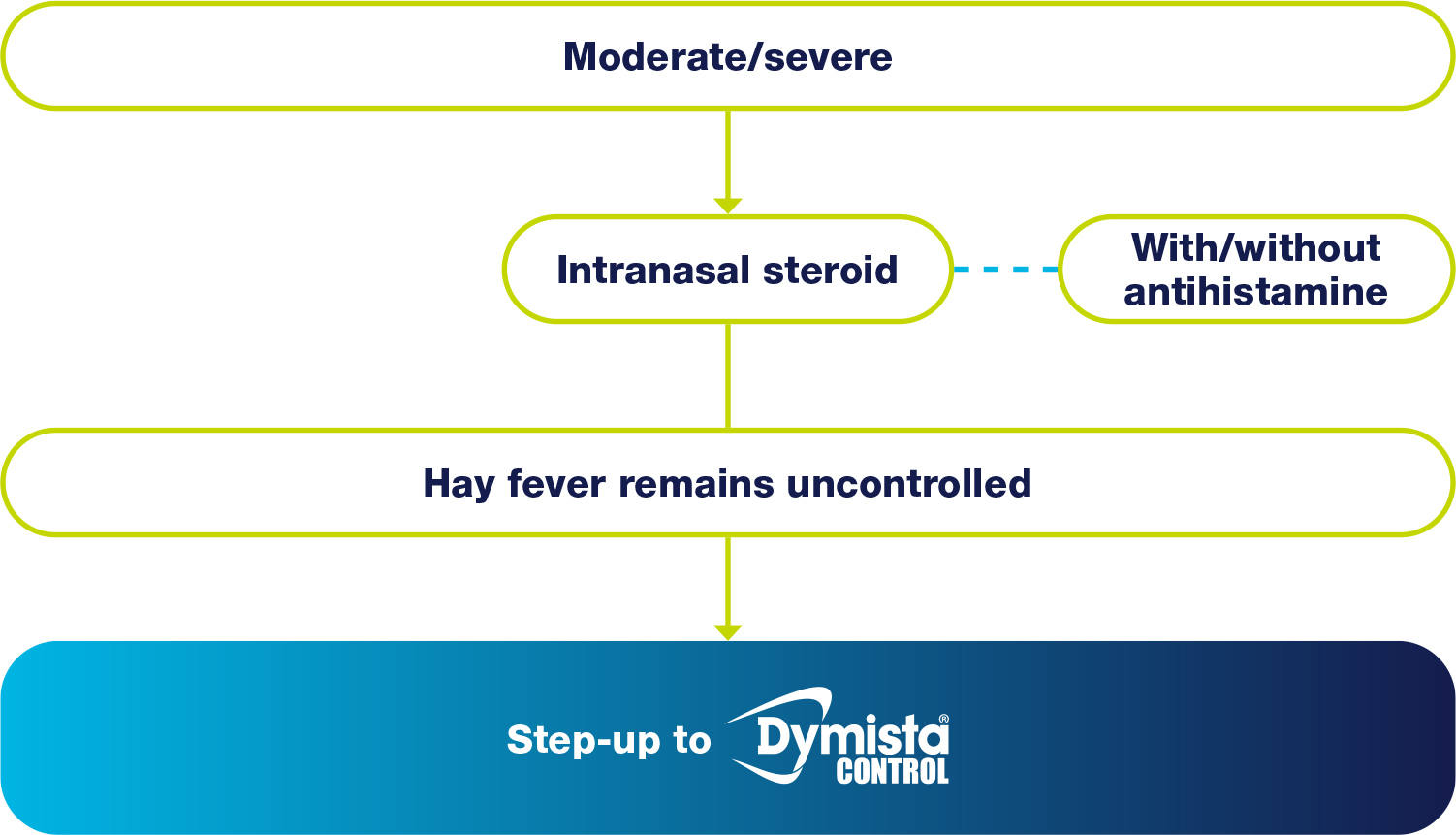
In particular, many customers suffering from moderate-severe symptoms (bothersome enough to reduce quality of life) may have tried an intranasal steroid spray (with or without oral antihistamines), but still suffer from troublesome symptoms.

FOR THESE CUSTOMERS, CONSIDER STEPPING UP TO DYMISTA® CONTROL.

WHEN HAY FEVER IS...
STEP 2

TREAT HAY FEVER WITH DYMISTA® CONTROL

Dymista® CONTROL can break the cycle of insufficient relief
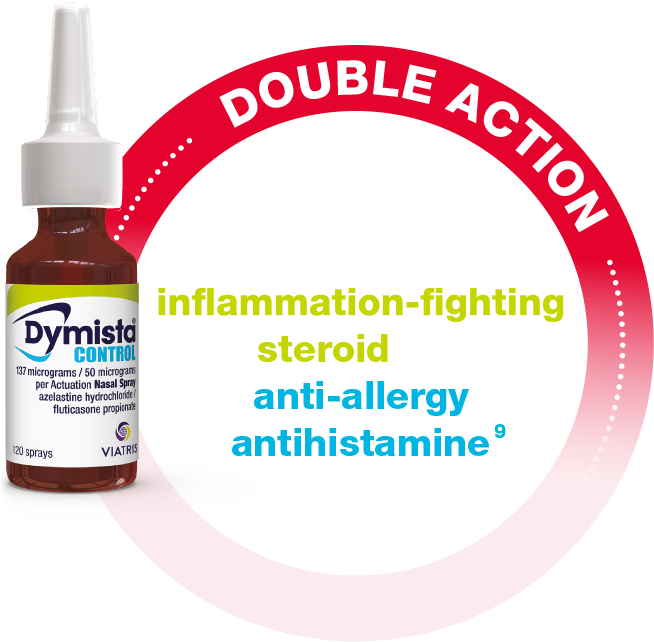
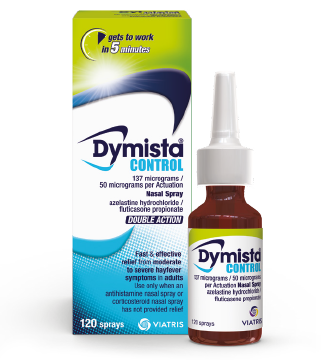
Dymista CONTROL (P), Azelastine hydrochloride 137 micrograms / Fluticasone propionate 50 micrograms per actuation

HOW DO ANTIHISTAMINES & STEROIDS WORK?
ANTIHISTAMINES

Help alleviate symptoms like sneezing, runny nose and itching by blocking the affects of histamine. 8 When used intranasally, the effects occur locally, providing quick relief. However, currently there are no nasal antihistamines available OTC. 9

INTRANASAL CORTICOSTEROIDS

Reduce the inflammation in the nasal passages to treat nasal congestion, and various other symptoms of rhinitis. 8

Dymista® CONTROL

Faster and more effective relief at reducing all EYE and NASAL hay fever symptoms than a steroid nasal spray alone (fluticasone propionate) 10 or a steroid spray combined with an oral antihistamine(loratidine) 11

  • Itchy, red,
    watery eyes

  • Sneezing

  • A runny nose &
    nasal congestion

The British Society for Allergy & Clinical Immunology (BSACI) recommends: 8

Treatment with a combined intranasal steroid and antihistamine is more effective than either agent used alone.

Discussing Dymista® CONTROL is as simple as... 7

  1. Assess hay fever symptoms

    Are your symptoms bothersome, affecting your sleep or other aspects of daily life?

    Yes

    symptoms are bothersome; hay fever is moderate-to-severe

  2. Query previous treatment

    Have you used a steroid nasal spray for hay fever before?

    Yes

    symptoms are not sufficiently relieved with steroid sprays

  3. Check for contraindications *

    Are you pregnant or breastfeeding and/or using other medicines containing corticosteroids?

    No

    contraindications
*Refer to sections 4.3 and 4.4 of the SmPC.

STEP 3

USING DYMISTA ® CONTROL CORRECTLY

Correct use of nasal sprays is crucial to achieve the desired effects. It is therefore very important to teach your customers how to use their spray correctly so that they have effective, fast-acting relief from their hay fever symptoms.

Advise your customer to use:
1 spray per nostril, twice daily (morning and evening)7

Correct technique can reduce the possibility of an unpleasant taste or smell 1

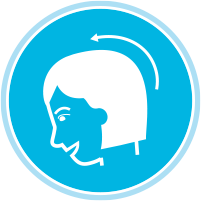
  • Tilt the head forward slightly, as though reading a book

  • Breathe in lightly through the nose

If hay fever symptoms persist after 7 days of using Dymista® CONTROL, the patient should visit their GP to rule out an alternative diagnosis. 7

1 bottle provides 1 month of relief for all eye and nose symptoms*

*RRP: £19.99 per bottle (120 sprays) 4 sprays a day: 67p a day.

People with hay fever can use Dymista® CONTROL for 3 months continuously. This should offer relief for their entire allergy season. For use beyond 3 months of continuous use, refer them to a GP. 7

Dymista® CONTROL has an established safety profile and is well tolerated 7,10
Correct technique can reduce the possibility of some side effects; however, there are other side effects that are mostly mild and typical of those reported with azelastine hydrochloride and fluticasone propionate, including: 7

  • Nosebleeds: very common (≥1/10)

  • Headache: common (≥1/100 to <1 /10)

  • Unpleasant taste or smell: common ( <1 /100 to <1/10)

Please consult the Dymista® CONTROL SmPC for full safety information. 7

Dymista CONTROL (P), Azelastine hydrochloride 137 micrograms / Fluticasone propionate 50 micrograms per Actuation

SUMMARY

Help break the cycle of insufficient relief

Swipe for more information

THE STRUGGLE

RECOMMENDING
DYMISTA® CONTROL

Almost 3 in 4 hay fever sufferers use multiple medicines, often at the same time, and continue to experience severe symptoms. 3,4

They become stuck in a cycle of insufficient relief. 3,4

Faster and more effective at reducing all eye and nose symptoms than a steroid nasal spray alone (FP) 10 or FP + oral antihistamine (LORA) 7,11

*Recommended by The British Society for Allergy & Clinical Immunology (BSACI) as part of stepwise treatment approach 8

FP=fluticasone propionate; LORA=loratadine; OTC=over-the-counter.
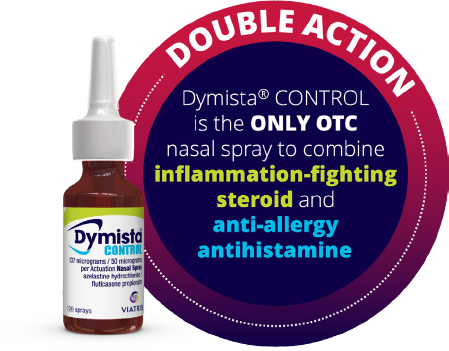
The only OTC 2-in-1 solution 9

for adults with moderate-to-severe hay fever who have tried a steroid nasal spray 7

REFERENCES

1. Canonica G, et al. Allergy. 2007:62(suppl 85);17–25

2. Canonica G, et al. World Allergy Organ J. 2008;1(9):138–144

3. Carr W, et al. J Allergy Clin Immunol. 2012;129(5):1282–1289.e10

4. Pitman R, et al. Allergy. 2012;67(suppl 96):342–342.

5. Viatris. Dymista® CONTROL Consumer Research. December 2025

6. Singh A and Kumar P. Front. Allergy. 2022;3:964–987.

7. Dymista® CONTROL Summary of Product Characteristics.
Available online: https://www.medicines.org.uk/emc/product/100435/smpc/print

8. Scadding G, et al. Clin Exp Allergy. 2017;47:856–889.

9. OTC Directory. Available online: https://www.otcdirectory.co.uk/ [Accessed: February 2026].

10. Meltzer E, et al. Int Arch Allergy Immunol. 2013;161:369–377

11. Bousquet J, et al. J Allergy Clin Immunol Pract. 2018;6(5):1726–1732

Online references last accessed February 2026.

PRODUCT INFORMATION

Please refer to the Summary of product characteristics (SmPC) for full information before recommending this product.

Dymista® Control 137 micrograms / 50 micrograms per Actuation Nasal Spray. Contains azelastine hydrochloride and fluticasone propionate.
Indication: Relief of symptoms of moderate to severe seasonal allergic rhinitis in adults if monotherapy with either intranasal antihistamine or glucocorticoid is not considered sufficient. Dosage and method of use: 18 years of age or over: The recommended dose is one actuation in each nostril twice daily (morning and evening). The maximum daily dose should not exceed 2 sprays in each nostril per day. Dymista® Control Nasal Spray should not be used in children and adolescents under 18 years of age. Dymista® Control Nasal Spray is for nasal use only.
Contra-indications: Hypersensitivity to the active substance or to any of the excipients. Warnings and Precautions: Treatment should be stopped, or the advice of a doctor sought if an improvement is not seen within 7 days. The advice of a doctor or pharmacist should also be sought if symptoms have improved but are not adequately controlled within 7 days. This medicine should not be used for more than 3 months continuously without consulting a doctor.
Medical advice should be sought before using this medicine in the case of:

  • concomitant use of other corticosteroid products, such as tablets, creams, ointments, asthma medications, similar nasal sprays, or eye/nose drops.

  • fever or an infection in the nasal passages or sinuses.

  • recent injury or surgery to the nose, or problems with ulceration in the nose.

Clinically significant drug interactions in patients receiving fluticasone propionate and ritonavir, resulting in systemic corticosteroid effects including Cushing’s syndrome and adrenal suppression. Therefore, concomitant use of fluticasone propionate and ritonavir should be avoided, unless the potential benefit to the patient outweighs the risk of systemic corticosteroid side-effects.
Systemic effects of nasal corticosteroids may occur, particularly when prescribed at high doses for prolonged periods. These effects are much less likely to occur than with oral corticosteroids and may vary in individual patients and between different corticosteroid preparations. Potential systemic effects may include Cushing’s syndrome, Cushingoid features, adrenal suppression, growth retardation in children and adolescents, cataract, glaucoma and more rarely, a range of psychological or behavioural effects including psychomotor hyperactivity, sleep disorders, anxiety, depression, or aggression. Dymista® Control Nasal Spray undergoes extensive first-pass metabolism, therefore the systemic exposure of intranasal fluticasone propionate in patients with severe liver disease is likely to be increased. This may result in a higher frequency of systemic adverse events. Caution is advised in these patients. Treatment with higher than recommended doses of nasal corticosteroids may result in clinically significant adrenal suppression. If there is evidence for higher than recommended doses being used, then additional systemic corticosteroid cover should be considered during periods of stress or elective surgery. In general, the dose of intranasal fluticasone formulations should be reduced to the lowest dose at which effective control of the symptoms of rhinitis is maintained. Higher doses than the recommended one have not been tested for Dymista® Control. As with all intranasal corticosteroids, the total systemic burden of corticosteroids should be considered whenever other forms of corticosteroid treatment are prescribed concurrently. Visual disturbance may be reported with systemic and topical corticosteroid use. If a patient presents with symptoms such as blurred vision or other visual disturbances, the patient should be considered for referral to an ophthalmologist for evaluation of possible causes which may include cataract, glaucoma, or rare diseases such as central serous chorioretinopathy (CSCR) which have been reported after use of systemic and topical corticosteroids. Close monitoring is warranted in patients with a change in vision or with a history of increased ocular pressure, glaucoma and/or cataracts. If there is any reason to believe that adrenal function is impaired, care must be taken when transferring patients from systemic steroid treatment to Dymista® Control Nasal Spray. In patients who have tuberculosis, any type of untreated infection, or have had a recent surgical operation or injury to the nose or mouth, the possible benefits of the treatment with Dymista® Control Nasal Spray should be weighed against possible risk. Infections of the nasal airways should be treated with antibacterial or antimycotical therapy, but do not constitute a specific contraindication to treatment with Dymista® Control Nasal Spray. Dymista® Control Nasal Spray contains benzalkonium chloride. Long term use may cause oedema of the nasal mucosa. Side-effects: Very Common (≥1/10): Epistaxis. Common (≥1/100 and <1/10): Headache, dysgeusia (unpleasant taste), unpleasant smell. Uncommon (≥1/1,000 and <1/100): Nasal discomfort (including nasal irritation, stinging, itching), sneezing, nasal dryness, cough, dry throat, throat irritation. Rare (≥1/10,000 and <1/1000): Dry mouth. Very rare (<1/10,000): Hypersensitivity including anaphylactic reactions, angioedema (oedema of the face or tongue and skin rash), bronchospasm, dizziness, somnolence, glaucoma, increased intraocular pressure, cataract, nasal septal perforation, mucosal erosion, nausea, rash, pruritus, urticaria, fatigue, weakness. Side effects where the frequency cannot be estimated from available data: blurred vision, nasal ulcers. Systemic effects of some nasal corticosteroids may occur, particularly when administered at high doses for prolonged periods. In rare cases osteoporosis was observed if nasal glucocorticoids were administered long-term. Product licence number: PL 46302/0094 Name and address of the product licence holder: Mylan Products Ltd, Station Close, Potters Bar, Hertfordshire, EN6 1TL, United Kingdom. Supply classification: P. Cost: £13.72 (Trade price) Document number: UK-DTC-2024-00044. Date last revised: December 2024

Please report suspected adverse drug reactions (ADRs) and device failures to the MHRA through the Yellow Card scheme.
You can report via:

  • the Yellow Card website www.mhra.gov.uk/yellowcard

  • the free Yellow Card app available from the Apple App Store or Google Play Store

  • some clinical IT systems (EMIS/SystmOne/Vision/MiDatabank) for healthcare professionals

Alternatively, you can report suspected adverse drug reactions and device failures to the Yellow Card scheme by calling 0800 731 6789 for free, Monday to Friday between 9am and 5pm. You can leave a message outside of these hours. When reporting please provide as much information as possible. By reporting adverse drug reactions and device failures, you can help provide more information on the safety of this medicine. You can also report directly to the manufacturer at pv.uk@viatris.com

Content developed by Viatris in association with CIG Healthcare Partnership.
© 2026 CIG Healthcare Partnership

UK-DTC-2026-00025 February 2026

Change privacy settings